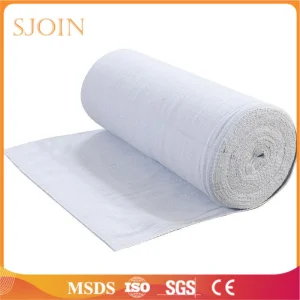
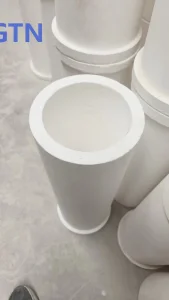
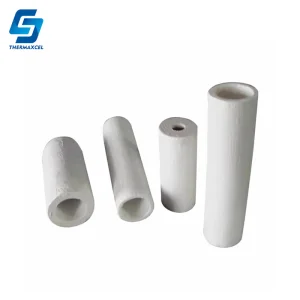
FibroCeram Materials
FibroCeram Materials
FibroCeram Materials
Engineered Ceramic Fiber Components & Modules
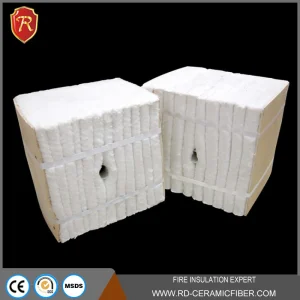 Refractory Heat Proof Thermal Insulation Fibre Wool Ceramic Fiber Block/ Module 300*300*300mm
View Details
Refractory Heat Proof Thermal Insulation Fibre Wool Ceramic Fiber Block/ Module 300*300*300mm
View Details
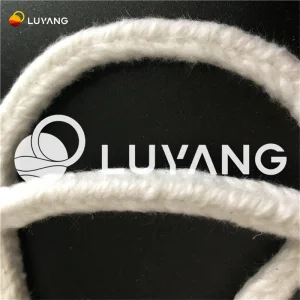
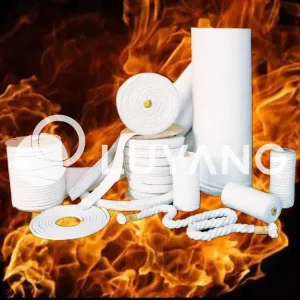 Refractory High Temperature Fibre Woven Textiles Thermal Insulation Ceramic Fiber Braided Round Square Rope for Door Seal Stove with Stainless Steel Ss Wire
View Details
Refractory High Temperature Fibre Woven Textiles Thermal Insulation Ceramic Fiber Braided Round Square Rope for Door Seal Stove with Stainless Steel Ss Wire
View Details
Henan FibroCeram Advanced Materials Co., Ltd. & Titan New Material Technical White Paper
The global demand for high-temperature thermal barriers has undergone a significant paradigm shift over the past decade. Industrial facilities, iron and steel plants, petrochemical refineries, and ceramics manufacturers are operating under tighter emission control frameworks and escalating energy costs. In this environment, traditional heavy refractory brickwork is increasingly being replaced by lightweight, high-performance aluminosilicate ceramic fiber elements.
Henan FibroCeram Advanced Materials Co., Ltd. (operating globally under the brand Titan New Material) stands at the forefront of this industrial transformation. As a major high-temperature insulation manufacturer in China, we leverage advanced raw material processing, automated production lines, and customized vacuum-forming configurations to supply global markets with thermal insulation solutions that minimize thermal mass, maximize fuel efficiency, and ensure stable performance under mechanical and thermal stresses.
Ceramic fibers are synthetic vitreous fibers manufactured by melting high-purity alumina-silica mixtures or alumina-silica-zirconia complexes. The chemistry of these materials dictates their maximum continuous service temperature limits. By utilizing high-purity raw minerals with negligible iron oxide (Fe₂O₃) and titania (TiO₂) contaminants, we ensure our fibers retain their amorphous structure and flexibility over extended duty cycles, preventing premature crystallization and shrinkage.
We classify our standard and custom ceramic fiber products into precise thermal and density matrices. The primary goal is matching the local environmental conditions of the furnace or thermodynamic system with the chemical makeup that yields the longest lifespan. Standard classifications range from 1260°C for common applications up to 1430°C for demanding ZrO₂-stabilized high-zirconia configurations.
Engineered Parameters for Titan New Material Solutions


Economic efficiency, localized manufacturing, and trade scaling
The transition of global industrial processing toward energy efficiency has intensified the importance of advanced thermal insulating elements. Heavy, slow-cycling kiln walls made from refractory bricks represent substantial waste in transient thermal operations. When a furnace is repeatedly heated and cooled, the thermal energy absorbed by the heavy lining is lost to the atmosphere during each cooling phase. Lightweight ceramic fiber components solve this issue by offering extremely low heat storage. This characteristic reduces energy consumption by up to 30% in batch kilns and metallurgical reheat systems.
In terms of production and distribution, Chinese manufacturers have established an efficient ecosystem for high-temperature refractory supply chains. Henan FibroCeram Advanced Materials Co., Ltd. benefits from regional access to high-purity alumina ores and silica deposits. Our localized supply chain enables us to scale production while maintaining tight control over chemical compositions. The integration of advanced processing machinery, computerized dry-forming technology, and precise wet vacuum forming allows China's factories to deliver custom ceramic fiber elements at highly competitive rates, without compromising on stringent ASTM, ISO, or CE performance parameters.
Global procurement teams prioritize reliable supply lines, high mechanical tolerances, and customization capabilities. In modern high-temperature furnace designs, off-the-shelf insulation panels are often insufficient. Engineers require custom-formed shapes, sleeve tubes, burner blocks, and complex gaskets to match specific furnace openings. Titan New Material addresses this requirement through our dedicated vacuum forming workshop, where custom-engineered molds yield tight dimensional tolerances, smooth exterior finishes, and homogeneous density distributions. This tailored approach minimizes site installation labor and eliminates thermal leaks at joint locations.
Engineered Applications Across Heavy Industries

Thermal linings for Regenerative Thermal Oxidizers (RTO), incinerators, ceramic shuttle kilns, high-capacity rotary kilns, laboratory muffle furnaces, and automated roller hearth kilns.
Structural thermal backing and crown insulation for heavy-duty tunnel kilns and movable kiln systems utilized in structural clay, red brick, and high-performance paving tile production.

Food-grade, high-density insulation wraps and floor backing sheets that optimize thermal mass containment, ensuring stable baking temperatures and reduced external envelope temperatures.
High-temperature ladle covers, tundish backup insulation, reheat furnace walls, soaking pit covers, and custom burner blocks designed to resist thermal shock and iron oxide slag scaling.
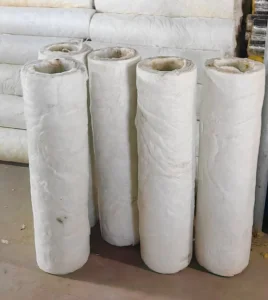
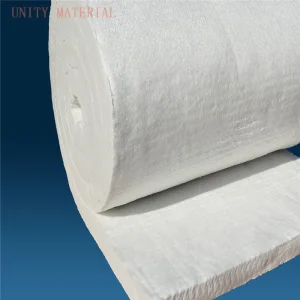
Highly compressed, custom-cut ceramic fiber blankets and lightweight board cores engineered as the primary fire-barrier core in standard-compliant commercial and maritime fire doors.

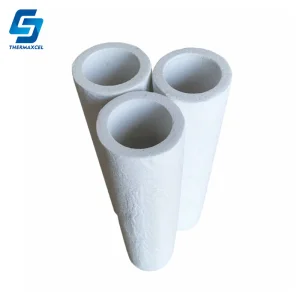
Pre-formed ceramic fiber sleeves, rockwool tube sections, and flexible high-temperature tape wrapping designed for chemical transport pipelines and steam recovery systems.
Expert Answers to Critical Industrial Procurement & Mechanical Questions
The fundamental difference lies in chemical composition. 1260°C classification fibers are typical alumino-silicate fibers with balanced alumina (~45-48%) and silica (~52-55%) ratios. The 1430°C classification features Zirconia (ZrO₂) added to the melt (typically 15-18%). Zirconia inhibits the crystallization of mullite and cristobalite phases at higher temperatures, reducing structural shrinkage and preserving fiber flexibility at elevated operating temperatures.
Vacuum forming utilizes a wet slurry processing method. Ceramic bulk fibers are mixed with water, organic binders (which provide green strength), and inorganic binders (which provide hot-state strength after firing). The slurry is vacuumed onto customized mesh molds, drawing the water through while leaving a compact deposit of fiber on the mold surface. The shapes are then dried in industrial ovens, removing moisture to produce rigid, custom-molded parts.
The choice of anchor system depends on your furnace wall design. Type S (stud-welded) anchors are suitable for automated guns and simplify flat casing installations. Type M (through-bolt style) anchors are used in double-lining applications or when dealing with irregular, pre-existing structural casings. Type T (slide-on guide bar) anchors allow adjustments during the layout phase, facilitating a tight seal between adjacent modules.
Rockwool is primarily made from basalt and slag, and is designed for applications up to 650°C. Above this range, rockwool loses its mechanical integrity as its binders decompose. Ceramic fiber is engineered from high-purity metal oxides, enabling continuous operation from 1000°C to 1400°C. Ceramic fiber also offers lower thermal conductivity, lower density, and better resistance to thermal shock in high-temperature settings.
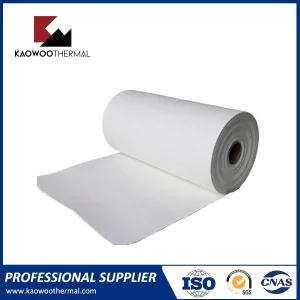
Organic binders are added to ceramic fiber paper to provide flexibility and handling strength at ambient temperatures. During the initial firing cycle (typically between 150°C and 300°C), these organic binders burn off, which may generate minor smoke and odor. This burnout does not compromise the paper's thermal insulating performance; the inorganic silica binders maintain the structural integrity of the fibers at higher temperatures.
Ceramic fibers are highly resistant to oxidizing atmospheres. However, in strongly reducing environments (such as hydrogen-rich atmospheres found in metallurgical annealing furnaces), silica (SiO₂) can be reduced to volatile silicon monoxide (SiO) gas. This reaction can lead to fiber shrinkage and loss of insulation thickness. In these conditions, high-purity alumina-rich fibers or polycrystalline mullite fibers are recommended.
Engineered Packing, Wrapping, and Structural Piping Solutions
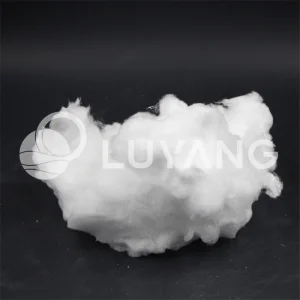
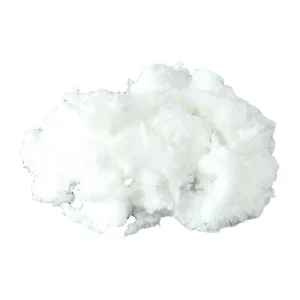 1700c Insulating Thermal Insulation Fire Door Infll Refractory Aluminum Silicate Polycrystalline Mullite Ceramic Fiber Cotton Wool Bulk for Furnace Kiln
View Details
1700c Insulating Thermal Insulation Fire Door Infll Refractory Aluminum Silicate Polycrystalline Mullite Ceramic Fiber Cotton Wool Bulk for Furnace Kiln
View Details
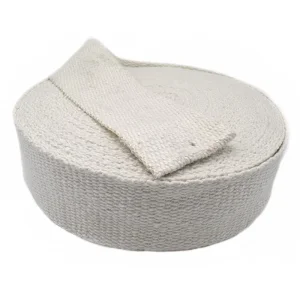 Vermiculite Wire Reinforced Glass Insert Drop Warp Pipe Protection Fireproof Heat Resistant High Temperature Ladder Insulation Webbing Woven Ceramic Fiber Tape
View Details
Vermiculite Wire Reinforced Glass Insert Drop Warp Pipe Protection Fireproof Heat Resistant High Temperature Ladder Insulation Webbing Woven Ceramic Fiber Tape
View Details
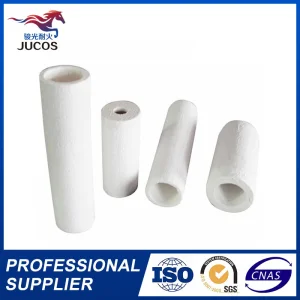
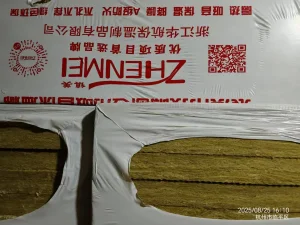 Ceramic Fiber Wool Lightweight Rock Wool Insulation Tube for Optimal Thermal Conductivity
View Details
Ceramic Fiber Wool Lightweight Rock Wool Insulation Tube for Optimal Thermal Conductivity
View Details